
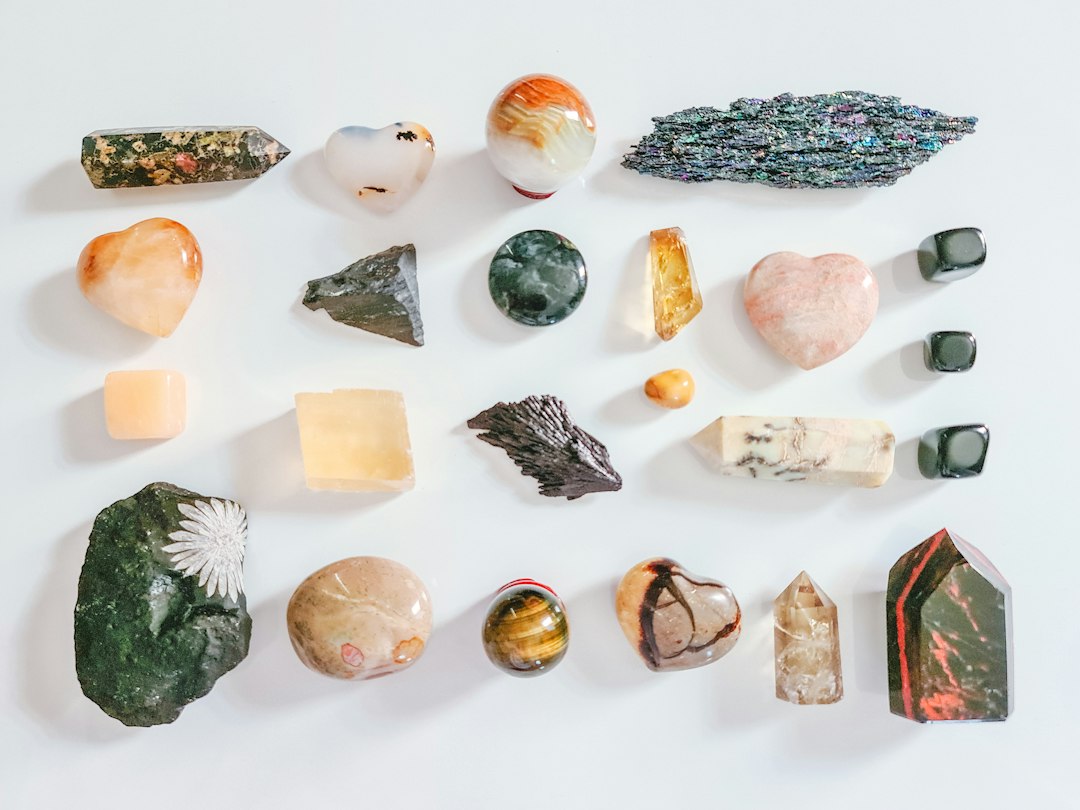
Crystals can add colour, texture and a sense of intention to an everyday space. You do not need a large collection or a complicated system to create a display that feels personal. A few thoughtfully chosen stones can become visual reminders to slow down, reflect or simply enjoy a beautiful natural object.
When choosing crystals for a room, it can be more useful to begin with the atmosphere you want to create rather than trying to find a stone that promises a particular result. Crystal symbolism can be meaningful as a personal practice, but it should not be treated as medical advice or a replacement for professional care.
Start with the feeling you want from the room
Think about the purpose of the space first. A bedroom may benefit from a softer, quieter display, while a home office might suit something visually clear and uncluttered. A living room can accommodate larger clusters or several contrasting stones because there is usually more room to experiment.
This approach makes choosing easier. Instead of asking which crystal is universally best, consider which colours, shapes and textures make you feel comfortable when you look at them.
Choose a small collection rather than filling every surface
A handful of stones can have more visual impact than a crowded display. Try combining one larger statement piece with two or three smaller stones. Leave some empty space around the arrangement so that each piece remains easy to see.
Natural materials such as wood, ceramic, linen or stone can work well alongside crystals. The goal is not to create a display that looks overly staged, but one that fits naturally into the room.
Consider colour and natural texture
Crystal collections can become especially attractive when colour is used deliberately. Amethyst introduces purple tones, rose quartz offers a soft pink accent, while clear quartz can provide a lighter, more neutral appearance. Darker stones can create contrast against pale shelves or natural fabrics.
Shape matters too. A polished stone has a different visual character from a raw cluster, point or geode. Mixing finishes can make a small arrangement feel more interesting without requiring many pieces.
Let symbolism remain personal
Many people enjoy crystals because of the stories, traditions and symbolism associated with different stones. You might choose a particular piece because its traditional meaning resonates with an intention you want to keep in mind, such as calm, focus, gratitude or balance.
There is no need to treat these associations as fixed rules. The personal meaning of an object can be enough. A crystal placed beside a journal, for example, might simply remind you to spend a few minutes writing at the end of the day.
Think about practical placement
Beautiful displays still need sensible care. Before placing a crystal near a sunny window, check whether prolonged direct light could affect its colour. Some minerals are also sensitive to water, humidity or scratches, so care requirements should be considered before using a particular stone in a bathroom or beside a sink.
Heavy clusters should sit on stable surfaces, while smaller pieces can be kept in trays or individual compartments. Keeping different stones separated can help prevent harder minerals from scratching softer ones.
Create a small ritual around the space
A crystal display can become a useful visual cue for an existing healthy habit. You might pause for a few slow breaths when you see it, write down one thing you are grateful for, put your phone away for a few minutes or tidy the surrounding area.
The benefit comes from the routine you build around the space rather than from claims about crystals producing medical effects. Keeping that distinction clear allows the display to remain an enjoyable and personal part of everyday life.
Let the collection evolve naturally
You do not have to find the perfect arrangement immediately. Move pieces when the room changes, rotate seasonal objects or keep only the stones you genuinely enjoy. Over time, your collection can become a reflection of your tastes and memories.
The simplest approach is often the most satisfying: choose pieces you like, give them enough space to be appreciated, care for them appropriately and let their symbolism remain personal. A few intentional details can turn an ordinary shelf or corner into a calmer visual space without making the room feel cluttered.